Beginner guide
How to Start Envelope Budgeting
Envelope budgeting helps you divide your money into clear spending categories so you can make confident spending decisions without guessing.
The quick overview
Starting an envelope budget does not require a perfect spreadsheet or a full month of planning. The basic process is simple: decide what money is available, split it into envelopes, spend from the right envelope, and update the plan as you learn.
- 1Know how much money is available
- 2Create a small set of envelopes
- 3Assign money to each envelope
- 4Track spending as it happens
- 5Adjust when real life changes
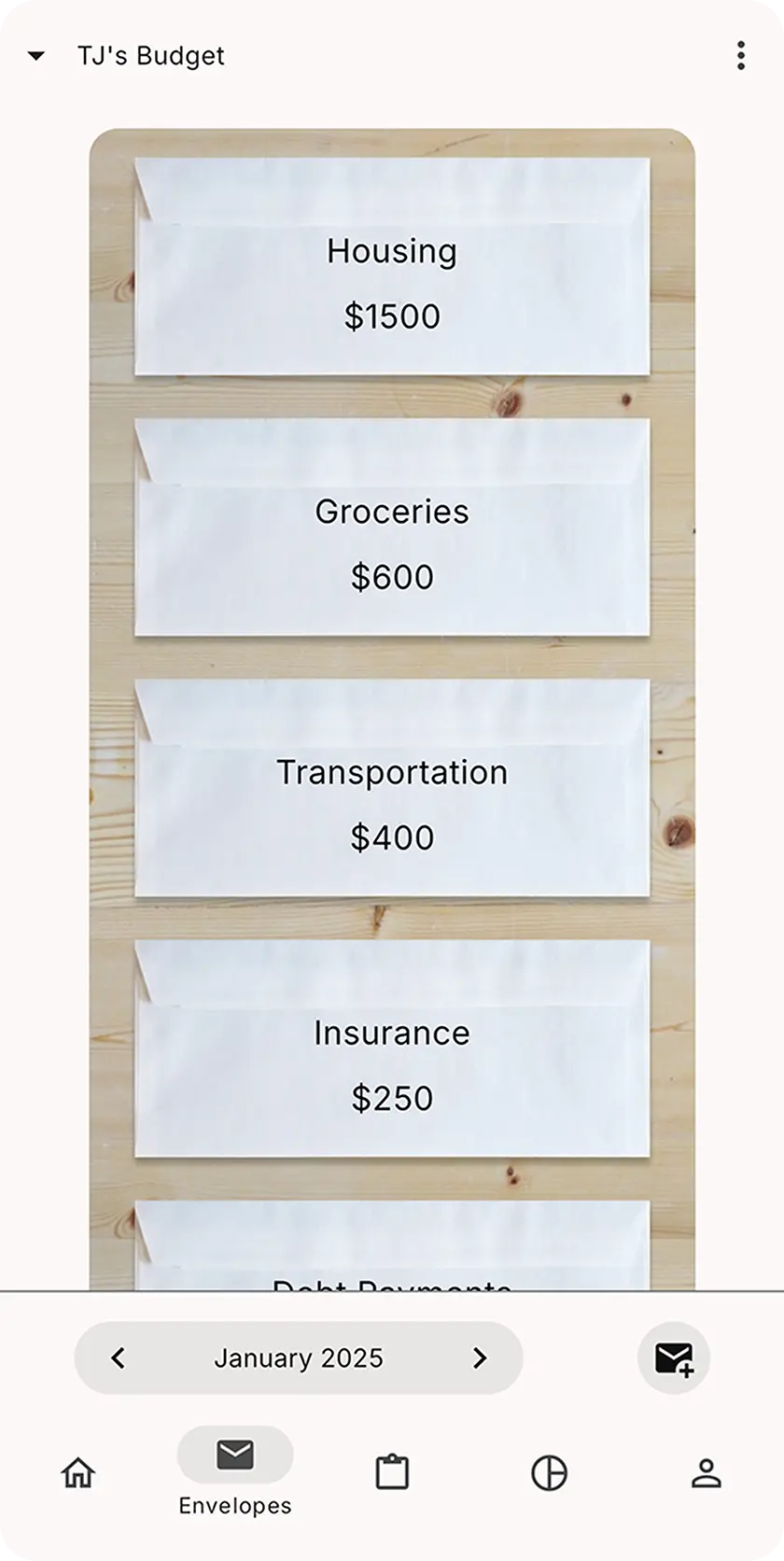
Start with the money you actually have
Envelope budgeting works best when you plan real money, not money you hope will arrive later. You can start with your monthly income, your next paycheck, or the cash currently available in your checking and savings accounts.
If you budget monthly
Estimate the income you can safely use for the month, then decide what that money needs to cover before the month ends.
If you budget by paycheck
Ask what this paycheck needs to do before the next one arrives: bills, groceries, gas, savings, and any known expenses.
If income varies
Start with money already in hand. Keep essential envelopes funded first, then add to flexible categories as income arrives.
Create your envelope categories
Your envelopes should match the spending decisions you actually make. Start broad enough to keep the budget manageable, then add detail only where it improves your choices.
Assign money to each envelope
Once you know what money is available, give each dollar a job. That might sound formal, but the idea is simple: decide what your money needs to do before you spend it.
If you assign all available money to envelopes, you are using a zero-based style. You do not need to make that complicated. Fund the most important envelopes first, then work down the list.
Track spending as it happens
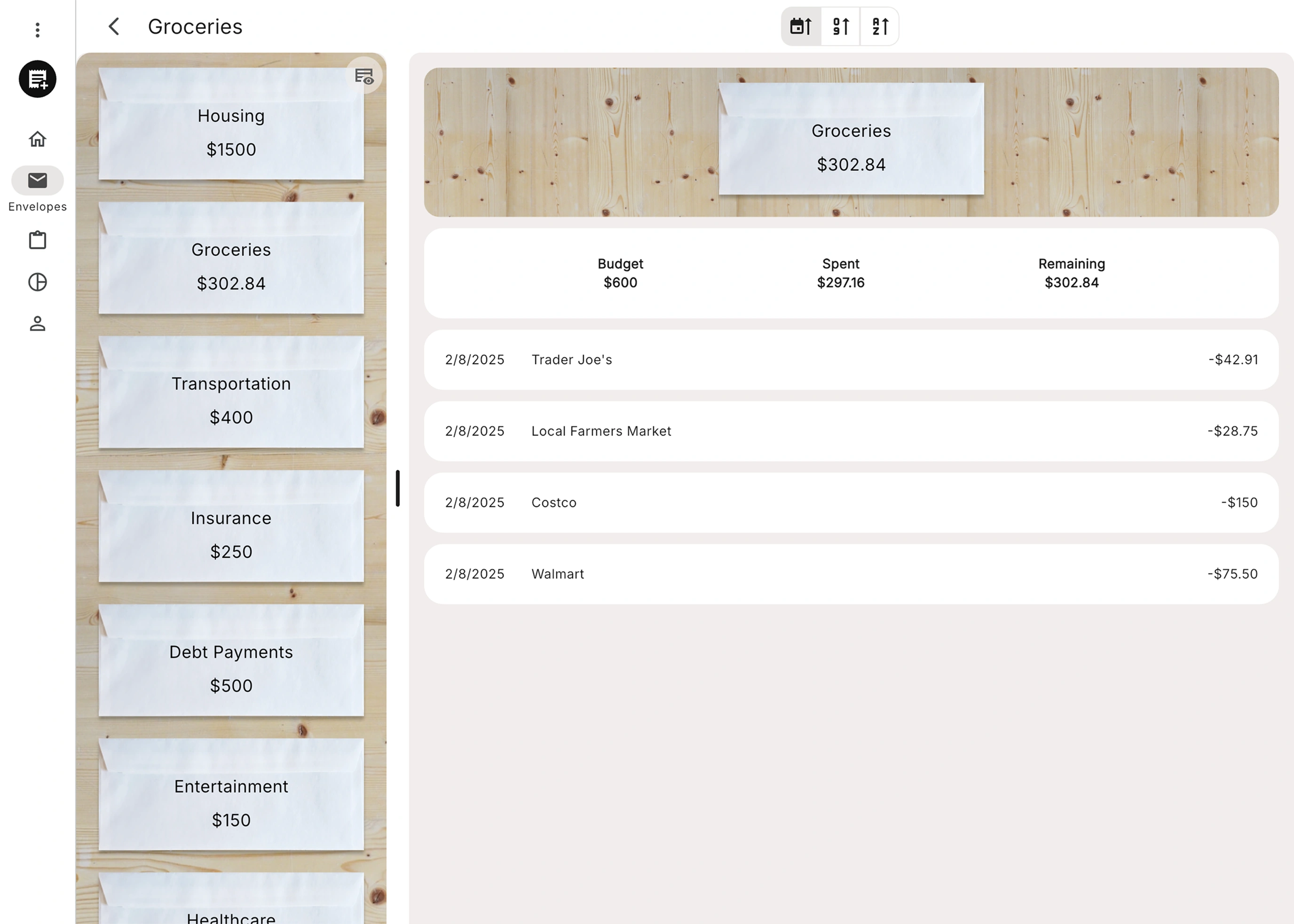
When you spend money, subtract it from the matching envelope. The envelope balance becomes the number you can trust before the next purchase.
Grocery envelope example
- Assigned
- $400
- Spent
- -$72
- Left for groceries
- $328
Adjust your budget over time
Envelope budgeting is flexible. If the gas envelope runs low, you can move money from eating out. If groceries cost more this month, you can adjust the next plan instead of pretending nothing changed.
The goal is awareness and control, not perfection. A good budget gives you enough information to make a tradeoff on purpose.
Common beginner mistakes
Most envelope budgeting problems are not personal failures. They are setup problems, tracking problems, or categories that need to be adjusted after real life shows up.
Creating too many envelopes
Start with the categories that affect real decisions. You can always add more detail once the basic habit feels natural.
Forgetting irregular expenses
Car repairs, annual subscriptions, gifts, holidays, and medical costs are easier to handle when you save a little before they arrive.
Not tracking spending consistently
Envelope balances only help if they stay current enough to trust before you spend.
Giving up after one imperfect month
The first month is mostly a learning month. Use surprises as information for the next budget.
Treating the budget as fixed
A useful budget changes when your life changes. Moving money between envelopes is part of the system.
Cash envelopes vs digital envelope budgeting
Traditional cash envelopes use physical cash. You put grocery money in a grocery envelope, gas money in a gas envelope, and stop when an envelope is empty or intentionally move money from somewhere else.
Digital envelope budgeting modernizes the same idea. Your envelopes become balances in an app, so you can track debit card purchases, online bills, subscriptions, shared spending, and savings without carrying cash.
New to the method? Read what envelope budgeting is for a broader explanation before building your first plan.
How RealBudget makes envelope budgeting easier
RealBudget keeps the envelope method simple: make a plan, track what happened, and check what is left before the next spending decision.
Comparing budgeting apps? See why RealBudget may be a simpler YNAB alternative.
Envelope budgeting FAQ
How many envelopes should I start with?
Start with a small set of practical categories, often around eight to twelve. Include the categories you make decisions about most often, then add more envelopes only when the extra detail helps.
Can I use envelope budgeting without cash?
Yes. Digital envelope budgeting uses the same idea as cash envelopes, but the envelopes live in an app. You can use debit cards, online bill pay, and digital transactions while still tracking category balances.
Is envelope budgeting the same as zero-based budgeting?
They are closely related. Envelope budgeting divides money into categories, while zero-based budgeting means assigning all available money to a job. Many digital envelope budgets use a simple zero-based style.
What if I overspend an envelope?
Overspending is a signal to adjust, not a reason to quit. Move money from another envelope if that tradeoff makes sense, then use what you learned when planning the next budget.
Can couples use envelope budgeting together?
Yes. Couples can use envelope budgeting to agree on categories, check what is left, and make spending decisions from the same plan. RealBudget supports budget sharing as a premium feature.
Do I need bank sync to use envelope budgeting?
No. Manual tracking works well for many people and is free in RealBudget. Bank sync can be helpful if you want transactions imported automatically, but it is not required to start.
Related envelope budgeting resources
Envelope Budgeting Categories
Pick starter envelopes that match how your money actually moves.
Digital Envelope Budgeting
Move the envelope system into a simple app-based workflow.
Free Envelope Budgeting App
Start manual envelope budgeting for free with RealBudget.
Free Envelope Budgeting Tool
Sketch an allocation plan before creating your envelopes.
Start envelope budgeting with RealBudget
Create envelopes, track spending, and know exactly what's left.